- AI
- Artificial Intelligence

Website owners and content publishers want to deliver ads in a non-disruptive way while avoiding ad-blockers. According to the 2020 Streaming Monetization Report, nearly half of advertisers think server-side technology (SSAI), or dynamic ad insertion, is the best solution.
Dynamic ad insertion benefits both marketers and viewers. Why? Let’s examine how SSAI integrates personalized ads into video streams for an answer.
SSAI (Server-Side Ad Insertion) is a technology that "stitches" advertisements into long-form content. That's why marketers call this process ad stitching.
Server advertising is mostly used in OTT (over-the-top) and CTV (connected TV) videos for integrating ads into the stream. How does this technology work, and what differentiates it from other online marketing types?
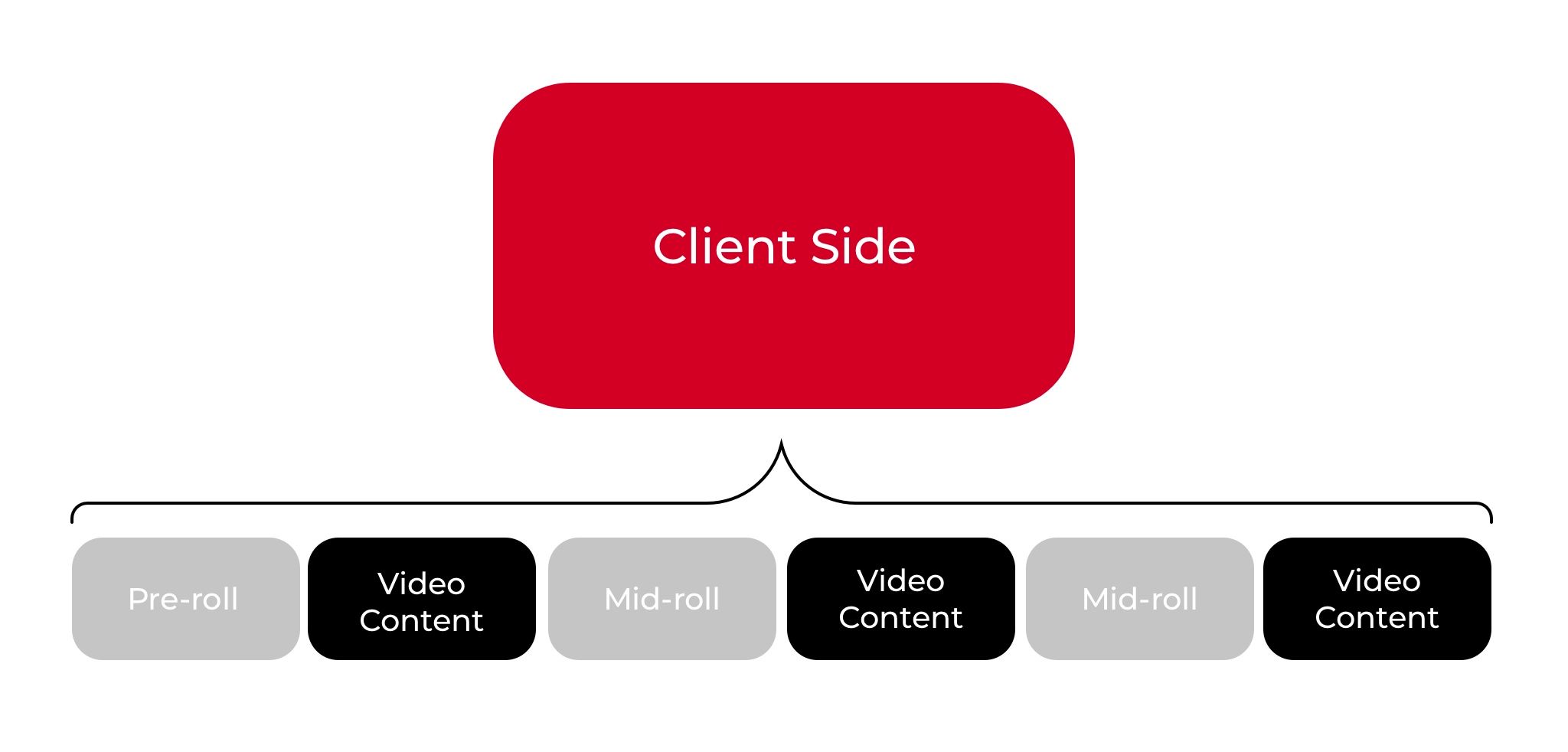
Long before SSAI, vendors used to deliver ads into video streams using client-side ad insertion (CSAI). This technology allows the playback client (the media player) to pre-download and place ads into the video at designated locations. The most famous example of client-side insertion is YouTube, where advertisements and content are separate media files sequenced together.
While CSAI can deliver personalized marketing, it has some significant downsides. First, it comes with latency issues during live streaming because the content and ads are separate. Even worse, CSAI is susceptible to ad-blockers — software that stops client-side ads from appearing.
Server-side technology addresses these problems by integrating the ads into the video stream on the CMS (content management system) level for a seamless and lag-free viewing experience.
Dynamic ad insertion technology is a combination of several elements:
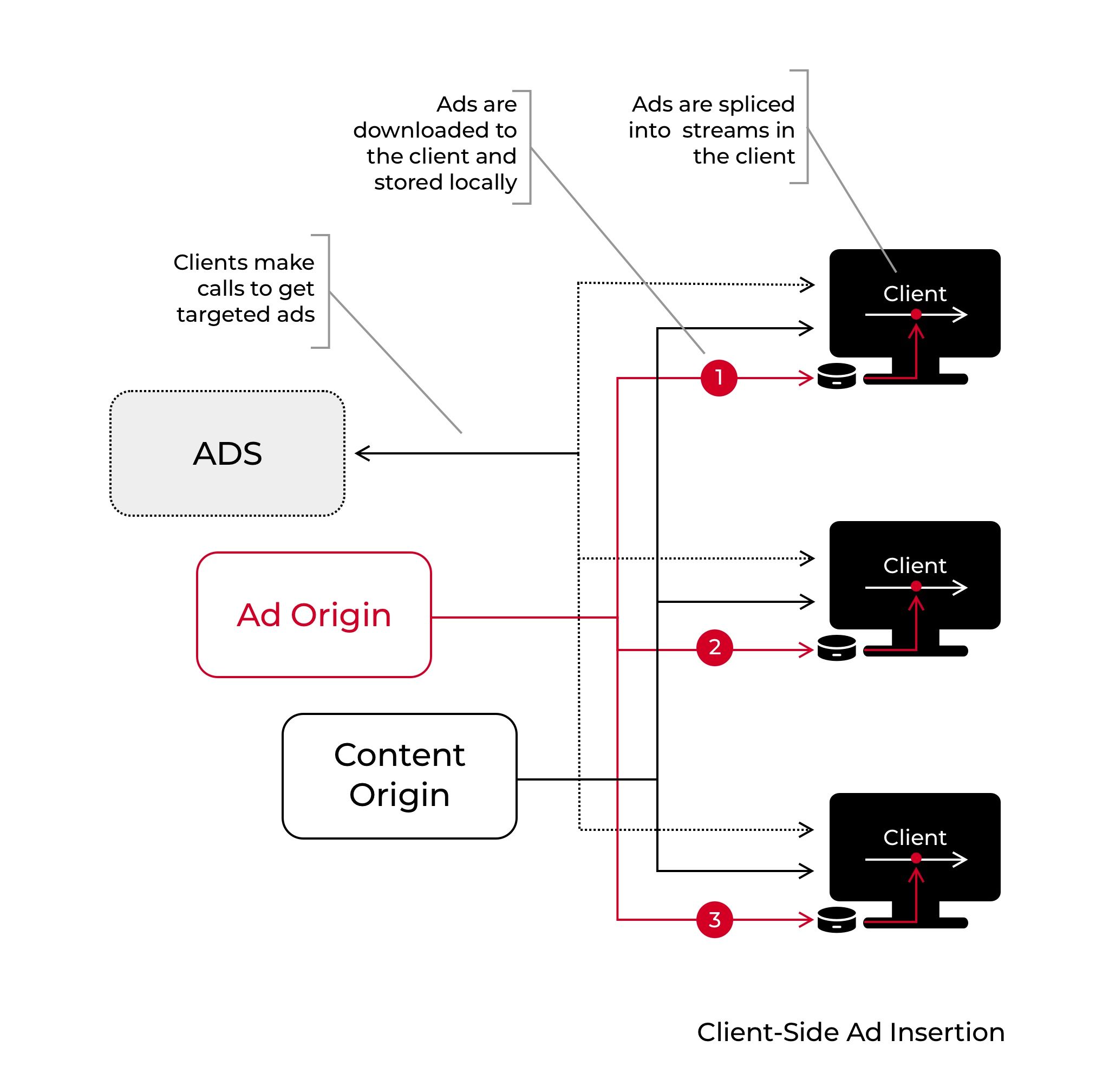
Now, how does this all work?
So, you decide to watch a movie, a TV show, or a news broadcast. Here's what happens after you click "play":
Server-side ad insertion provides several advantages for both the viewer and the streamer. What are they?
The global market for dynamic ad insertion technology reached $1.8 billion in 2020 and is expected to grow to $2.9 billion by 2027. Let's take a closer look at SSAI benefits and drawbacks for the app monetization industry to see what makes it so popular.
Optimized for live streaming. SSAI uses adaptive bitrate streaming to stitch advertisements into video content. This technology adapts to various bandwidths to work with slow internet. As a result, the viewer feels like they’re watching one continuous stream despite taking ad breaks. In contrast, CSAI impairs the experience by introducing latency and buffering issues.
Personalized marketing. Digital ad insertion allows vendors to deliver relevant content to viewers based on their search queries and geolocation. This personalized content isn't limited to product offerings; it can also provide weather forecasts, traffic, and local news.
Bypassed ad-blocks. Ad-blockers filter requests from third-party ad servers to stop ads from appearing. According to a 2019 GWI report, approximately 40% of internet users block ads with specialized plug-ins and software. Dynamic ad insertion technology bypasses these plug-ins by inserting advertisements into the stream before it loads. As a result, ad-blockers are unable to identify and filter the ads in a video.
Improved revenue. The loss of revenue from ad blocking in the US alone reached over $12.12 billion in 2020. As we mentioned, server-based advertising counters ad-blockers, thus improving the ad revenue. But let's not forget that SSAI enhances the user experience by personalizing ads and providing them more seamlessly. Consequently, users are less bothered by ads (which made them install ad-blocking tools in the first place).
Limited measurement. SSAI lacks the viewer-tracking and interactivity measurement capabilities of the client-side insertion. Even though ads in dynamic insertion are woven in a video, server components can't always correctly recognize the receiving and corresponding data points. Additionally, CTV and OTT advertising still lack clear parameters for evaluating advertising performance.
Fraud. Scammers use device farms and bots to mix traffic sources and spoof legitimate vendors. This technique creates artificial traffic, forcing companies and marketers to pay for views from bots instead of real viewers. SSAI spoofing attacks, such as the ICEBUCKET operation, are widespread problems for CTV advertising and usually very hard to detect.
Ad stitching can improve the user experience and boost revenue for media owners who provide video content. In particular, this technology helps:
SSAI is an excellent advertisement delivery system for CTV, OTT, and other video streaming services. This technology optimizes ads for the viewer. Furthermore, server advertising helps avoid ad-blockers and, consequently, improve the ad revenue.
Do you need help implementing this monetization technology? Postindustria can plan the delivery of SSAI and assess the infrastructure costs. Contact us to schedule a call with our experts!
Get actionable insights for your product